Handmade sunglasses and massproduced sunglasses both shield your eyes from the sun, but the path from raw material to finished product is notably different for each. When deciding which is more ecofriendly, a lot of people want to know what goes into each process and the impact they have on our planet. In this article, I’ll break down exactly what’s involved in making each type and how their environmental impact stacks up.
What Does “Carbon Footprint” Mean in Sunglasses Production?
Before we get into comparisons, it helps to be clear on what “carbon footprint” really means in the world of sunglasses. The term tracks how much greenhouse gas—mainly carbon dioxide—is released into the air during the full life span of a pair of sunglasses. From raw material extraction and manufacturing, to packaging, shipping, and even the way they’re disposed of or recycled, every step factors in.
The carbon footprint is shaped by several elements:
- Production Energy: The source and amount of energy needed to make sunglasses, whether from renewable sources or fossil fuels.
- Materials Sourcing: How much emissions are created when extracting or making the wood, metal, plastic, or acetate used in the frames and lenses.
- Transportation: The journey raw materials and finished products take—and how they get from one place to another.
- Packing and Shipping: From the packing materials themselves to the way the product is shipped, both play a part in increasing or cutting down emissions.
All these pieces come together to create each product’s carbon footprint, and they can look very different for handmade versus massproduced sunglasses.
How Handmade Sunglasses Are Crafted
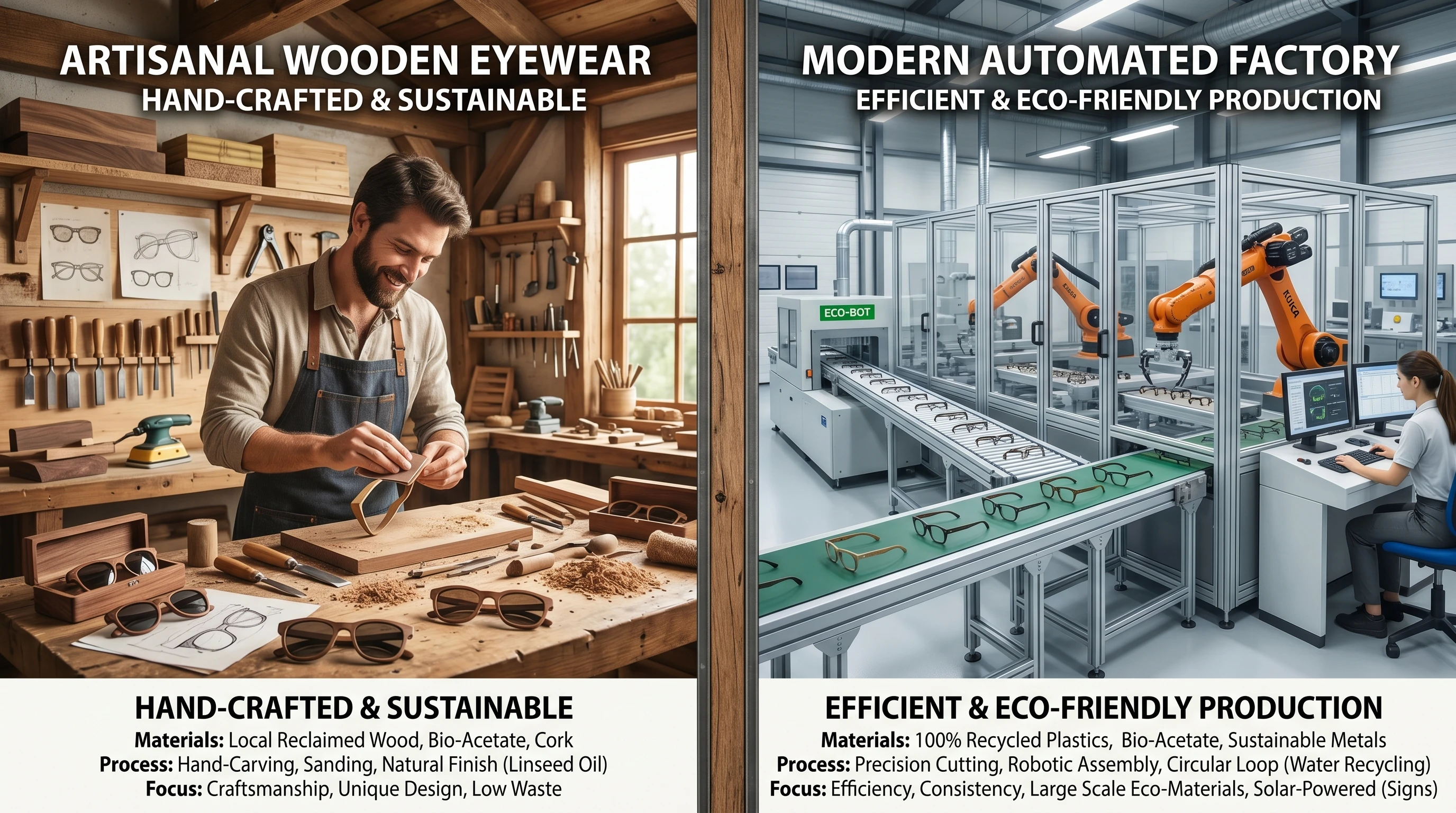
Handmade sunglasses are generally made by skilled craftspeople or small boutique brands in limited batches. Each pair is assembled with hand tools and personal attention, often tapping into techniques that have been passed down over generations. The idea is to work carefully and use fewer machines, sometimes with a focus on sourcing supplies from nearby or using old, upcycled materials.
Key aspects of handmade sunglasses include:
- Manual Work: Craftspeople use saws, files, sanders, and drills instead of industrial machines, keeping energy use down.
- Material Choices: Sustainable woods, recycled acetate, and biobased plastics are often chosen for their lower environmental impact.
- Smaller Runs: Creating products in small groups leads to less overall waste and an easier path to making sustainable choices.
- Quality Focus: Because the maker checks every pair, there’s less waste from defects, and unsellable items are usually minimal.
By crafting sunglasses in this way, workshops can give energy usage and emissions a real break, especially if they’re careful about which materials and tools they lean on.
Mass Production and Its Environmental Side
Massproduced sunglasses are made in massive quantities by big factories, usually with automated machinery running around the clock. These systems are fast and can dramatically lower cost per pair, but they also use a ton of energy and material.
- Big Machines: Large automated equipment, powered by electricity or fossil fuels, churns out sunglasses all day long.
- Plastic Injection Molding: Most massproduced sunglasses come from injection molding—a process that involves a heavy energy investment and typically requires petroleum based plastics.
- Global Supply Lines: Raw materials and finished sunglasses travel long distances, often moving from one country to another, which adds up transportation emissions.
- Waste Output: Mistakes in large batches can mean hundreds or thousands of flawed products are trashed if standards aren’t met.
When all this comes together, the carbon footprint per production run is pretty high. However, factories often try to make up for this by aiming for efficiency across massive quantities, which sometimes lowers the average footprint per unit a bit.
Comparing Carbon Footprints: Handmade vs Mass Produced
Although each brand does things their own way, some trends show up when comparing handmade and massproduced sunglasses regarding carbon emissions:
- Energy Consumption: Handmade sunglasses call for less total energy, with workshops mostly using hand tools and minimal equipment. Factories run on far more power to keep up with big demand.
- Materials Matter: Small scale brands can switch to recycled or locally sourced materials quickly, reducing emissions. Major factories often stick with new materials for cost and consistency.
- Waste Record: Limited batches in handmade workshops mean mistakes don’t pile up as large amounts of waste, while highvolume production sometimes leads to entire batches being discarded.
- Shipping Emissions: Handmade brands may sell regionally, cutting down on longdistance travel, while massproduced sunglasses often cross oceans to reach customers.
Studies in the fashion and eyewear industries, such as the 2022 journal article on eyewear life cycle assessment, show that handmade sunglasses typically have lower emissions per pair—especially when local material sourcing and renewable energy are baked in.
Important Factors to Compare in Sunglass Choices
Opting for a low carbon option is more than just “handmade vs massproduced.” These factors deserve extra thought:
- Frame and Lens Materials: Sunglasses made from wood certified by the FSC (Forest Stewardship Council), recycled metals, or bioacetate will bring down your footprint compared to energy intensive plastics or nonrenewable materials.
- Energy Source: Factories or workshops powered by solar, wind, or other clean energy sources keep emissions low.
- No Frills Packaging: Many handmade companies cut plastic from their packaging or choose compostable materials to minimize extra waste.
- Long Life: Sunglasses built to last (and be fixed) spread out their footprint over more years, reducing the impact per wear.
- End of Life Options: Products that can be easily fixed, recycled, or even composted further minimize their total carbon cost.
Energy Use in Depth
Where you get your energy from matters a lot. Even small handmade operations can rack up emissions if they run on coalfired power. Factories tapping into solar or wind can beat out handmade makers using dirty energy. Some ecofocused brands actually share details about their electricity sources on their websites, so check for this info if sustainability is your top concern.
The Role of Materials
The frames themselves make a big difference. Traditionally, acetate frames are made using cotton or wood pulp, so they’re less damaging than standard plastic, but still need chemicals and energy to produce. Choosing recycled metals, reclaimed wood, or innovative bioplastics can move the needle even further in cutting back emissions.
Impact of Shipping and Packaging
Local goods mean less travel, which translates to lower transportation emissions. Buying from a regional artisan instead of importing from the other side of the world is a smart way to keep your purchase planet friendly. In addition, handmade sellers often use paper or even plantable seed wraps, skipping plastic and excess packaging entirely.
FAQs: Carbon Footprint and Sustainable Sunglasses Choices
Questions pop up often when considering sustainable sunglasses. Here are a few key answers:
Question: Does handmade always guarantee a lower carbon footprint?
Answer: Not necessarily. If a handmade brand sources rare wood from far away or doesn’t run an efficient workshop, their impact can still be sizeable. Sticking to local and sustainable supplies matters most.
Question: Are massproduced sunglasses ever ecofriendly?
Answer: They can be. Some large brands have started using recycled plastics, ecofriendlier dyes, and carbon neutral factories. Trustworthy certifications (like B Corp or EcoCert) point to brands actively reducing their emissions.
Question: Does recycled plastic make a real difference?
Answer: Generally, yes. Recycled plastic means less new petroleum is pulled from the earth and less energy goes into converting raw materials. A few handmade brands even gather up ocean plastics or use plantbased materials for their frames.
How to Track Down Lower Carbon Sunglasses Brands
Looking for tips to find sunglasses with a smaller carbon footprint? Here are some practical steps:
- Materials Use: Choose brands that go with recycled metal, ocean plastic, or sustainably harvested wood.
- Local Workshops: Brands that produce closer to home (and tell you where they make their products) are usually lower impact.
- Energy Transparency: Find out if the company uses renewable sources—a lot of brands share this in their story or sustainability page.
- Packaging Commitment: Look for minimal or compostable packing materials instead of traditional plastic mailers.
- Take Back or Repair Systems: A few companies accept your old sunglasses for recycling or offer replacement parts to extend product life.
If you want to dig further, check out review sites like Good On You, which score ecofriendly brands and cover many eyewear companies too.
Wrapping Up
The carbon footprint of handmade sunglasses generally lands lower than largebatch factory options, mostly due to local production, thoughtful material choices, and a focus on renewable energy. Still, it pays off to check beyond marketing buzzwords. Look into each brand’s materials, power sources, shipping routes, and packaging practices. Every time you opt for a lowerimpact pair, you help pave the way for a more planet friendly take on personal style. Take time to ask questions and do a bit of research—your choices make a real difference for our world and its future.